When building owners receive notice of an upcoming Periodic Facade Inspection, the typical response is to view it as a compliance obligation to be managed with minimum fuss. Schedule the inspection, address whatever issues surface, move on.
This reactive mindset misses a critical reality: by the time facade deterioration becomes visible during a mandatory inspection, remediation costs have already escalated far beyond what preventative maintenance would have required. Worse, the interval between discovering problems and addressing them creates liability exposure that most facility managers underestimate.
For operations directors managing commercial towers, mixed-use developments, or institutional properties in Singapore, facade cleaning represents something more strategic than aesthetic upkeep. It’s the frontline defense against structural degradation, compliance violations, and the reputational damage that comes when falling debris from your building makes headlines.
The question isn’t whether to maintain building exteriors. It’s whether your current approach actually protects your operational interests, or simply checks boxes until the next inspection cycle forces your hand.
Why Singapore’s Environment Accelerates Facade Deterioration
Building exteriors in Singapore face environmental conditions that compress years of typical weathering into shorter timeframes. The combination of tropical humidity, heavy rainfall, urban air pollution, and intense UV exposure creates a perfect storm for facade degradation.
The deterioration sequence follows predictable patterns:
Surface soiling accumulates from airborne particulates, vehicle emissions, and industrial pollutants. In high-traffic urban corridors, this happens within weeks of cleaning. The grime layer isn’t just cosmetic; it traps moisture against building materials and creates acidic compounds that begin chemical degradation of substrates.
Biological growth establishes itself wherever moisture persists. Algae, moss, and fungi don’t just discolour surfaces – they root into microscopic fissures in concrete, stone, and grout. As these organisms grow, they physically widen cracks and compromise sealant integrity. In Singapore’s humid climate, shaded facade sections can develop visible biological growth within months.
Water ingress follows when surface protection breaks down. Compromised sealants, widened cracks, and damaged coatings allow water to penetrate behind cladding systems. Once moisture reaches substrate materials, corrosion of steel reinforcements begins. This internal degradation progresses invisibly until surface spalling makes it apparent – at which point repair complexity and cost have multiplied significantly.
The business implications compound over time:
Property managers operating under the assumption that facades can be left alone between mandatory inspections are effectively choosing deferred maintenance over asset protection. By the time BCA’s Periodic Facade Inspection identifies defects requiring immediate attention, the opportunity for cost-effective preventative intervention has passed.
Commercial properties in Singapore’s CBD face additional accelerated wear. Reflective heat from adjacent glass towers, concentrated air pollution from traffic corridors, and exposure to construction dust from perpetual urban development all intensify facade degradation rates. Buildings in Marina Bay, Raffles Place, and Orchard Road aren’t just managing normal weathering – they’re combating an aggressive urban environment that demands more proactive maintenance approaches.
The True Cost of Reactive Facade Management
Most facility managers can recite their annual cleaning budgets. Far fewer can quantify what reactive facade management actually costs their operations over time. The gap between these figures represents the hidden expense of deferred problems.
Emergency interventions disrupt operations and inflate costs
When facade issues reach the point where they trigger safety concerns or compliance notices, remediation can’t wait for convenient scheduling. Scaffolding goes up during business hours. Access equipment blocks building entrances. Tenants receive notices about ongoing works. The operational disruption alone creates costs that don’t appear in repair invoices.
Emergency facade repairs typically cost three to five times what systematic preventative maintenance would have required. Contractors mobilized on short notice command premium rates. Specialized equipment rental costs more when booked reactively. Building owners pay urgency premiums throughout the procurement chain.
More significantly, emergency works often reveal additional problems that weren’t apparent during initial assessment. What starts as addressing localized spalling expands when adjacent areas show similar deterioration once scaffolding provides access. The final remediation scope – and cost – frequently exceeds initial projections by substantial margins.
Liability exposure during the intervention gap
The period between identifying facade defects and completing repairs creates specific liability concerns that property managers should understand clearly. Once a Periodic Facade Inspection documents defects, building owners have acknowledged knowledge of potential hazards. If falling debris injures someone before remediation is completed, the owner’s awareness of the risk becomes relevant to liability determinations.
Property insurance premiums may be affected when known facade defects remain unaddressed for extended periods. Some policies include provisions requiring timely maintenance of identified hazards. Building owners who defer remediation to manage cashflow may discover their coverage is affected when they eventually need it.
For commercial properties, tenant relationships also suffer when facade problems become visible. Retail tenants in malls where facade degradation is apparent may raise concerns about how property management reflects on their brand association. Office tenants evaluating lease renewals factor building maintenance standards into their decisions about whether to stay or relocate.
Asset valuation implications
Property valuations consider maintenance condition. Buildings with documented facade defects, particularly those requiring significant remediation, see valuation impacts that exceed the direct repair costs. Prospective buyers or investors factor in both the immediate repair expense and what deferred maintenance signals about overall property management standards.
For REITs and institutional property owners, these valuation impacts have portfolio-wide implications. A single property with significant deferred facade maintenance affects investor perception of management quality across the entire portfolio. The reputational cost extends beyond the specific building.
What BCA’s Periodic Facade Inspection Actually Requires
Singapore’s Building and Construction Authority mandates Periodic Facade Inspections for buildings exceeding 13 meters in height. The inspection cycle is once every five years for buildings over 20 years old, and once every seven years for newer structures. These aren’t optional assessments – they’re regulatory obligations with specific compliance requirements.
The inspection scope is comprehensive
Qualified inspectors must examine the entire building envelope, not just areas showing obvious problems. This includes external walls, cladding systems, architectural features, windows, sealant joints, and any facade elements where failure could create falling debris risks.
Inspectors document defects across defined categories: immediate danger requiring urgent remediation, defects requiring repair within a specified timeframe, and observations of developing issues that need monitoring. Building owners receive detailed reports specifying required actions and compliance deadlines.
The inspection isn’t merely documentation – it triggers legal obligations. Once defects are identified, building owners must complete specified remediation within mandated timeframes. Failure to comply results in enforcement action, penalties, and potential orders prohibiting occupation until issues are addressed.
The compliance challenge most property managers face
Periodic Facade Inspections occur on fixed schedules regardless of building condition. Property managers who defer maintenance between inspections often discover multiple defects requiring simultaneous remediation. The regulatory deadline for addressing identified issues doesn’t accommodate budget constraints or operational convenience.
This creates a predictable crisis cycle: buildings coast along with minimal facade maintenance between inspections, the mandatory assessment identifies accumulated defects, owners scramble to mobilize contractors and budget for unplanned works, remediation happens under time pressure with associated cost premiums.
Forward-thinking property managers break this cycle by implementing systematic facade maintenance that addresses deterioration progressively. Regular cleaning removes contaminants before they cause chemical damage. Periodic inspections by facade access contractors identify developing issues early when intervention is simple and inexpensive. Sealant maintenance happens on planned schedules rather than in response to leaks.
Integration of cleaning with inspection obligations
Smart operators recognize that facade cleaning contracts can serve dual purposes. When facade access teams are on-site performing scheduled cleaning, they’re positioned to conduct informal condition assessments. Technicians working on facades can document developing issues, photograph areas of concern, and flag potential problems for property management attention.
This approach transforms cleaning from a cosmetic activity to an asset monitoring function. Rather than discovering problems during mandatory five or seven-year inspections, issues surface during routine six-month or annual cleaning cycles. The earlier identification creates time for planned intervention before problems escalate.
For Hong Ye Group’s clients, this integration is systematic rather than incidental. Facade cleaning teams document observations digitally through the Smart iClean platform. Property managers receive condition reports alongside service verification, creating a continuous monitoring function that complements mandatory inspection obligations.
Why Access Method Selection Matters More Than Most Operators Realize
The equipment used to access building facades isn’t just a technical detail – it’s a strategic decision that affects cost, flexibility, safety liability, and service quality. Yet many property managers treat access methods as the contractor’s problem rather than a specification requiring informed decision-making.
Rope access versus installed systems: the business trade-offs
Buildings equipped with Building Maintenance Units or gondola systems have fixed infrastructure for facade access. This seems convenient until you consider the constraints. BMUs and gondolas provide access primarily to building faces where the system is installed. Recessed areas, architectural features, and complex facades may remain difficult to reach even with installed equipment.
System downtime creates scheduling problems. When BMUs require maintenance or develop faults, facade cleaning can’t proceed until repairs are completed. For properties where appearance standards matter – hotels, premium retail, Grade A offices – this inflexibility creates operational headaches.
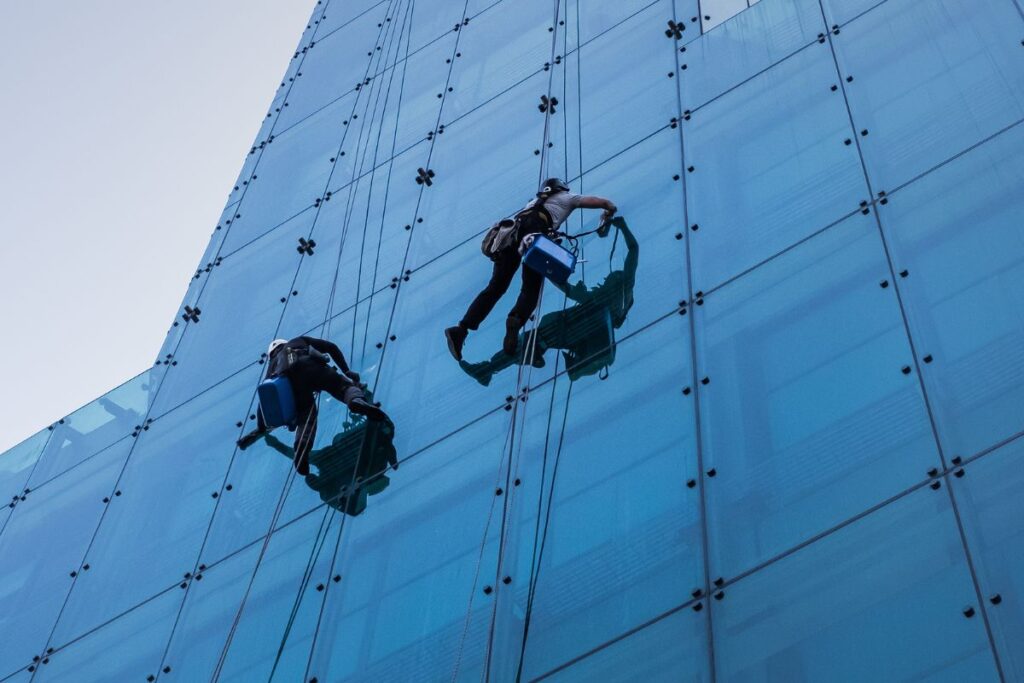
Rope access techniques using IRATA-certified technicians offer different trade-offs. Without requiring permanent installations, rope access can reach virtually any facade section including complex architectural features, recesses, and areas that gondola systems struggle to service. Mobilization is faster because there’s no dependence on building-specific equipment.
The cost comparison isn’t straightforward. Buildings with functioning BMU systems may find that using installed equipment costs less for routine full-building cleaning. But when specific areas need attention – spot repairs, addressing staining in particular zones, cleaning architectural features – rope access often proves more economical because it avoids mobilizing entire building access systems.
Safety certification and liability implications
All facade access methods carry inherent risks, but the certification frameworks differ significantly. Rope access work in Singapore requires technicians to hold recognized qualifications – typically IRATA (Industrial Rope Access Trade Association) or similar internationally recognized certifications.
IRATA certification isn’t a one-time credential. Technicians must maintain active certification through regular assessments and demonstrate ongoing competency. The certification levels (1, 2, 3) indicate capability, with higher levels required for supervising complex work. This creates verifiable skill standards that property managers can specify in service contracts.
Property owners engaging facade contractors should verify not just that the company holds licenses, but that specific technicians assigned to their buildings carry current, valid certifications. Some contractors claim “rope access capability” but deploy insufficiently qualified personnel. When accidents occur, the building owner’s due diligence in contractor selection becomes legally relevant.
BMU operation requires different certifications under Singapore’s Workplace Safety and Health regulations. Operators must be trained and certified specifically for the equipment they’re using. Again, property managers should verify current certification rather than assuming compliance.
Flexibility for integrated maintenance approaches
Modern facade maintenance increasingly integrates multiple disciplines: cleaning, minor repairs, sealant inspection, and condition monitoring. The access method needs to accommodate this scope expansion.
Rope access teams can carry tools and materials for minor interventions during cleaning activities. A technician identifying failed sealant during cleaning can address it immediately if equipped appropriately, converting what would have been a separate mobilization into efficient integrated service.
Gondola or BMU-based approaches face more constraints for integrated work. The equipment platform may not accommodate additional tools, materials, or team members needed for maintenance beyond cleaning. Separate mobilizations for different trades increase overall cost and extend the time building facades are in active maintenance mode.
Technology’s Role in Transforming Facade Maintenance from Service to Asset Intelligence
The gap between traditional facade cleaning contracts and what modern property management actually needs has widened as building owners demand more operational visibility. Knowing that cleaning happened matters less than verifying it happened correctly, understanding current facade condition, and using accumulated data to inform maintenance strategy.
Real-time verification versus trust-based service models
Traditional facade cleaning operates on trust: the contractor invoices for completed work, property management assumes it was done as specified unless problems become visible. This model fails when service intervals stretch to six months or longer. By the time quality issues surface, multiple service periods may have passed with no way to determine when standards first slipped.
Digital verification systems change this dynamic fundamentally. When cleaning teams document work through timestamped photo evidence, GPS verification, and completion sign-offs captured in real-time, property managers gain visibility that was previously impossible. They can confirm that scheduled work actually occurred, verify that all building sections were serviced, and spot-check quality through photographic documentation.
For multi-property portfolios, this visibility scales in ways that physical inspection cannot. A facilities director overseeing twenty buildings across Singapore can monitor facade maintenance execution for all properties from a single dashboard, identifying service gaps or quality issues without dispatching staff for site inspections.
Condition monitoring that informs capital planning
Each facade cleaning cycle generates data about building condition. Technicians document areas of concern, photograph developing issues, and note observations about sealant condition, substrate integrity, or biological growth patterns. Accumulated over multiple service cycles, this data reveals deterioration trends that inform capital expenditure planning.
Property managers who treat facade cleaning purely as a service transaction miss this intelligence opportunity. The teams accessing facades regularly are ideally positioned to monitor condition, but only if their observations are captured systematically and made accessible to building management.
Hong Ye Group’s Smart iClean platform structures this data capture deliberately. Facade access teams don’t just document that cleaning happened – they record condition observations, flag developing issues, and create longitudinal records of facade health. Property managers receive not just service verification but actionable intelligence about where intervention will be needed and roughly when.
This shifts facility management from reactive to predictive. Instead of waiting for Periodic Facade Inspections to reveal problems, building owners have continuous visibility into developing issues. Maintenance budgets can be planned based on actual condition data rather than assumptions about generic deterioration rates.
Integration with broader building management systems
Forward-thinking facility managers increasingly view cleaning data as part of comprehensive building intelligence. Facade maintenance schedules coordinate with HVAC system maintenance, window repairs, and other building services. Service delivery verification feeds into compliance documentation for green building certifications, safety audits, and operational reporting.
This integration requires technology infrastructure that can interface with property management systems, produce documentation in usable formats, and provide data access to stakeholders who need it. Generic cleaning contractors using manual documentation methods can’t support this level of integration. Property managers need vendor partners who understand that cleaning isn’t an isolated service but a component of integrated facility operations.
What Property Managers Should Actually Specify in Facade Cleaning Contracts
The gap between standard facade cleaning proposals and what commercial properties actually need creates predictable problems. Generic contracts focus on frequency and square meterage pricing, missing critical specifications that determine whether the service protects your operational interests or just fulfills a basic scope.
Access method and certification requirements
Specify the exact access methods appropriate for your building’s configuration. If rope access is necessary for architectural features or complex facades, require IRATA Level 2 or 3 technicians for supervisory roles. For BMU or gondola operation, specify that operators must hold current certifications for the specific equipment being used.
Don’t accept generic assurances that contractors are “licensed and insured.” Require proof of specific technician certifications and verify that the certifications are current. Include provisions requiring immediate notification if certified personnel are unavailable and proposed substitutes don’t hold equivalent credentials.
Service scope beyond basic cleaning
Effective facade maintenance includes more than removing visible dirt. Specify inspection requirements: teams should document condition observations, photograph areas of concern, and flag developing issues. Define what constitutes adequate documentation and how it will be delivered.
Include sealant inspection as part of regular cleaning cycles. Technicians accessing facades for cleaning are positioned to assess sealant condition at minimal additional cost. Catching failed sealants before they allow water ingress prevents far more expensive substrate damage.
Specify biological growth treatment protocols. Simple pressure washing may remove visible algae without addressing root systems, leading to rapid regrowth. Require appropriate treatments that kill organisms at source and include preventative measures where chronic biological growth occurs.
Documentation and verification standards
Define exactly what evidence of service delivery you require. Timestamped photographs of completed sections? GPS verification that teams were on-site during scheduled service periods? Digital sign-offs from building staff confirming work completion?
The more specific your documentation requirements, the less room for disputes about service quality or delivery. Generic provisions that contractors will “provide evidence of work completion” mean different things to different vendors.
For properties where appearance directly impacts business – hotels, premium retail, Grade A office buildings – consider specifying quality standards in measurable terms rather than subjective descriptions. What constitutes “clean” when both parties are operating from different expectations?
Response protocols for urgent issues
Facade cleaning teams may discover problems requiring immediate attention: failed sealants allowing water ingress, loose cladding elements creating falling debris risks, or structural concerns affecting safety. Your contract should specify exactly what happens when such issues are identified.
Define notification requirements: who gets contacted, within what timeframe, through what communication channels. Specify whether contractors are authorized to implement temporary safety measures pending permanent repairs, or whether they must cease work and await building management instruction.
For properties where appearance standards matter, include provisions for emergency callouts outside scheduled service intervals. When staining from a leak, vandalism, or other incident affects visible facades, waiting for the next scheduled cleaning cycle isn’t acceptable.
Integration with Periodic Facade Inspection obligations
Smart contracts coordinate regular facade cleaning with mandatory inspection requirements. Consider timing service intervals so that buildings receive professional cleaning shortly before scheduled Periodic Facade Inspections. Clean facades allow inspectors to better assess actual substrate condition without soiling obscuring their evaluation.
Include provisions requiring contractors to flag any issues that might trigger concerns during upcoming regulatory inspections. Early warning about developing defects gives property management time to address issues proactively rather than under regulatory deadlines following inspection findings.
Why Hong Ye Group’s Approach Differs From Standard Facade Contractors
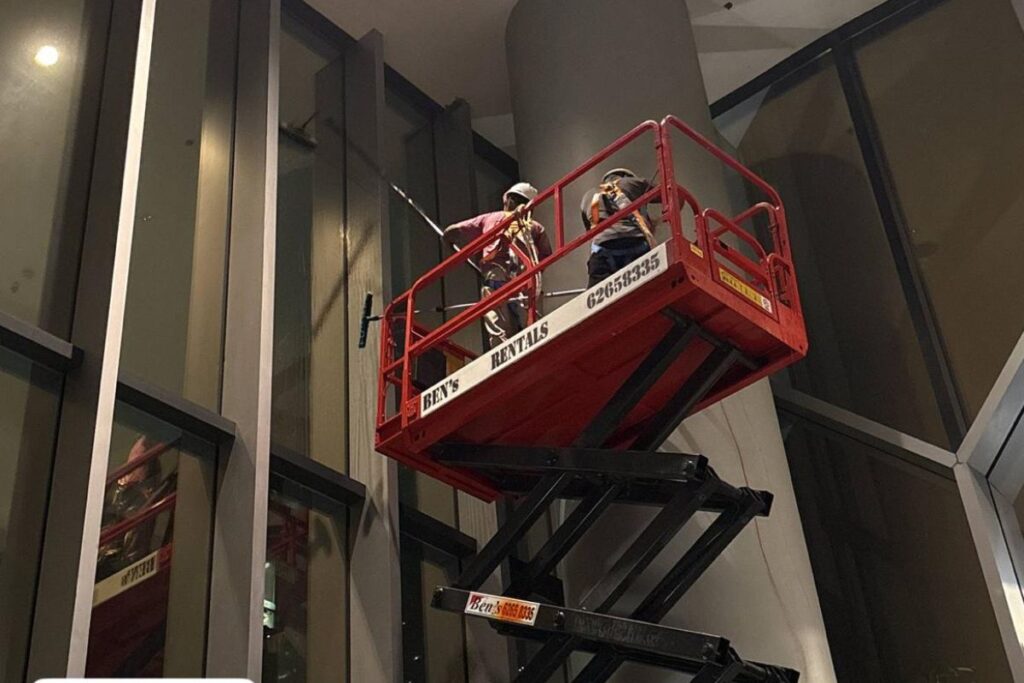
Singapore’s commercial property market has numerous facade cleaning contractors. Most can mobilize equipment, clean buildings, and invoice for services rendered. Far fewer understand that property managers need verified performance, integrated service delivery, and actionable intelligence from their facade maintenance partners.
IRATA certification and comprehensive safety protocols
Hong Ye Group’s facade access teams hold IRATA certifications appropriate to the complexity of work they’re assigned. This isn’t just about ticking regulatory boxes – it’s about deploying personnel with demonstrated competency for high-risk work environments.
The practical difference matters when complex facades or challenging access situations arise. IRATA Level 3 technicians supervising teams have proven capability managing technical rope access challenges. Property managers can specify demanding work knowing their contractor’s technical capabilities match the requirements.
Safety protocols extend beyond individual certifications. Every project undergoes formal risk assessment before work commences. Method statements specify exactly how access will be achieved, what safety systems will be deployed, and how potential hazards will be managed. Building managers receive documentation showing that facade work on their property has been planned systematically rather than approached reactively.
Technology-enabled service verification
Hong Ye’s Smart iClean platform provides the real-time visibility that modern property management demands. When facade cleaning happens, building managers see verification through timestamped documentation, photographic evidence of completed sections, and digital confirmation that scheduled work occurred as specified.
This transforms the relationship between property managers and service contractors. Instead of trust-based arrangements where cleaning supposedly happened according to schedule, facility managers have verifiable evidence. For portfolio operators managing multiple properties, this visibility scales in ways that physical inspection cannot.
The platform extends beyond mere service verification to condition monitoring. Facade access teams document observations about developing issues, photograph areas requiring attention, and create longitudinal records of facade condition. Property managers receive actionable intelligence alongside service delivery confirmation.
Integrated facilities management approach
For operations directors managing comprehensive building services, coordinating multiple specialist contractors creates complexity. Facade cleaning schedules need to align with other building maintenance, access equipment arrangements must coordinate with tenant activities, and service documentation should integrate with broader facility management records.
Hong Ye’s integrated facilities management model addresses this coordination challenge. When facade maintenance is part of a comprehensive building services relationship, scheduling coordination happens internally within the service provider rather than requiring property management to orchestrate between multiple vendors.
This integration extends to commercial intelligence. Buildings where Hong Ye provides integrated facilities management benefit from coordinated approaches to preventative maintenance. Facade cleaning schedules align with planned access for window repairs, sealant maintenance, or other building envelope work. Single mobilizations accomplish multiple objectives, reducing total cost and minimizing operational disruption.
Portfolio experience across Singapore’s commercial property
sectors
Hong Ye’s client relationships span the spectrum of Singapore’s commercial real estate: retail malls, hotel properties, office towers, mixed-use developments, and institutional facilities. This accumulated operational knowledge informs service delivery in practical ways.
Experience maintaining facades at high-profile properties like ION Orchard, Orchard Central, and Tiong Bahru Plaza provides reference points for approaching similar retail environments. Hotel experience from properties including Sofitel translates to understanding the appearance standards and operational constraints specific to hospitality. Healthcare facility work at institutions like Sengkang General Hospital creates frameworks for managing the compliance and hygiene requirements unique to medical environments.
When property managers are selecting facade maintenance partners, this operational track record matters. The questions operations directors should ask aren’t just about pricing and equipment – they’re about demonstrated capability in comparable environments. Has the contractor maintained facades on properties with similar architectural complexity? Do they understand the operational constraints of working in occupied high-rise environments? Can they show reference installations where systematic facade maintenance has been sustained over multi-year periods?
Making the Strategic Shift: From Reactive Cleaning to Systematic Asset Protection
Property managers reading this article likely recognize the dynamics described from their own operational experience. The question is what to do differently when current contracts expire or when budgets allow service model upgrades.
Audit current facade condition and service delivery
Start by honestly assessing where your building stands. When was the last comprehensive facade cleaning? Not spot work on ground-level sections, but systematic service of the entire building envelope including challenging access areas? If the answer involves measuring in years rather than months, your current approach isn’t adequate for Singapore’s environment.
Review documentation from your last Periodic Facade Inspection. What defects were identified? Were they symptomatic of deferred maintenance – issues that would have been preventable with more proactive care? If your inspection revealed problems requiring urgent remediation, consider what earlier intervention might have cost versus what you actually paid for emergency repairs.
Evaluate your current contractor’s documentation practices. Do you receive verification that scheduled work actually occurred? Can you confirm that all building sections were serviced, not just readily accessible areas? If your service records consist primarily of invoices without substantive evidence of work delivery, you lack the visibility modern facility management requires.
Reframe procurement around outcomes, not just pricing
When evaluating facade maintenance proposals, the lowest per-square-meter rate may represent poor value if it doesn’t include the capabilities you actually need. Compare proposals based on total cost of achieving your operational objectives, not just basic service unit pricing.
Consider what comprehensive facade maintenance requires: appropriate access methods for your building’s configuration, certified personnel qualified for high-risk work, systematic condition monitoring that informs capital planning, documentation standards that provide verification and support compliance obligations, integration with other building maintenance activities to minimize disruption and optimize scheduling.
Proposals offering all these capabilities will likely cost more than basic cleaning contracts. The question is whether the incremental cost is justified by better asset protection, reduced liability exposure, and operational visibility that prevents expensive surprises.
Establish service intervals appropriate to your building’s
exposure
Generic recommendations for semi-annual or annual facade cleaning don’t account for site-specific conditions. Buildings in high-pollution corridors, properties with extensive glass cladding that shows soiling quickly, or facilities where appearance directly impacts commercial performance may require more frequent service.
Conversely, some buildings in less exposed locations might sustain acceptable conditions with less frequent comprehensive cleaning supplemented by spot treatments of problem areas. The appropriate interval depends on your specific operational requirements, environmental exposure, and appearance standards.
Work with prospective contractors to establish service frequencies based on actual building needs rather than generic recommendations. Contractors who propose identical service intervals for every building aren’t tailoring approaches to specific requirements – they’re selling standardized packages regardless of suitability.
Build vendor relationships around partnership, not transactions
Commercial properties benefit when facade maintenance contractors function as strategic partners rather than transactional service providers. This means open communication about developing issues, collaboration on scheduling that minimizes business disruption, and contractor accountability for outcomes rather than just task completion.
For Hong Ye Group, this partnership approach is reflected in how service relationships evolve over time. Initial contracts might focus on facade cleaning scope. As operational trust develops and property managers see value in integrated service delivery, relationships often expand into comprehensive facilities management where Hong Ye coordinates multiple building services under unified operational frameworks.
The transition from reactive facade maintenance to systematic asset protection doesn’t happen overnight. But property managers who recognize that building exteriors require proactive care – and who select vendor partners capable of delivering it – protect their operational interests far more effectively than those who coast between regulatory inspections hoping problems don’t surface.
Taking Action: Protecting Assets Through Strategic Facade Management
Building facades aren’t static installations that can be ignored between mandatory inspections. They’re dynamic systems experiencing continuous environmental degradation that demands systematic attention. Property managers who recognize this reality and implement appropriate maintenance frameworks protect asset value, reduce liability exposure, and avoid the crisis cycles that plague reactive operators.
Evaluate your service model honestly
Does your current facade maintenance approach provide verification of service delivery, systematic condition monitoring, and integration with broader facility management objectives? Or does it simply fulfill minimum requirements until the next regulatory inspection forces your hand?
If the honest answer reveals gaps between what your building needs and what your current contract provides, consider what changes would better serve your operational interests. This might mean upgrading from basic cleaning to comprehensive facade maintenance, transitioning from trust-based service models to technology-verified delivery, or engaging contractors who understand that building exteriors require specialized approaches rather than generic cleaning.
Start conversations with capable vendors
Request detailed capabilities statements from prospective facade maintenance partners. Ask to see their safety credentials, IRATA certifications, equipment inventories, and technology infrastructure for service verification. Inquire about their experience with buildings similar to yours in size, complexity, and environmental exposure.
If vendors can’t demonstrate specialized capabilities for high-rise facade work, their proposals may not be comparable even if pricing appears competitive. Commercial buildings demand contractors with appropriate technical capacity, not just competitive rates.
Connect with Hong Ye Group for facility assessment
Hong Ye Group works with property managers across Singapore’s commercial sectors to develop facade maintenance strategies appropriate to specific building types and operational requirements. Whether you’re managing hotel properties where appearance is paramount, retail environments where brand presentation matters, or office towers where tenant satisfaction depends on building standards, systematic facade maintenance should be part of your facility management framework.
The company offers building assessments that identify gaps between current maintenance approaches and what your property actually requires. The goal isn’t to sell the most expensive service package – it’s to ensure building facades receive appropriate attention with verification systems that confirm work happens as specified.
For commercial properties where first impressions matter, compliance obligations carry liability implications, and asset protection requires verifiable service delivery, that assurance has measurable business value.
About Hong Ye Group
Hong Ye Group is Singapore’s award-winning integrated facilities management provider, serving commercial real estate across retail, hospitality, office, and institutional sectors. Recognized with the Singapore Quality Award and SGID Techblazer Award, Hong Ye combines specialized facade access capabilities with technology-enabled service verification through the Smart iClean platform. The company’s IRATA-certified rope access technicians maintain high-rise facades for prominent Singapore properties including ION Orchard, Orchard Central, Sofitel, and Sengkang General Hospital.
Contact Hong Ye Group to schedule a building assessment and discuss how strategic facade maintenance can protect your property investment while ensuring regulatory compliance and operational transparency.