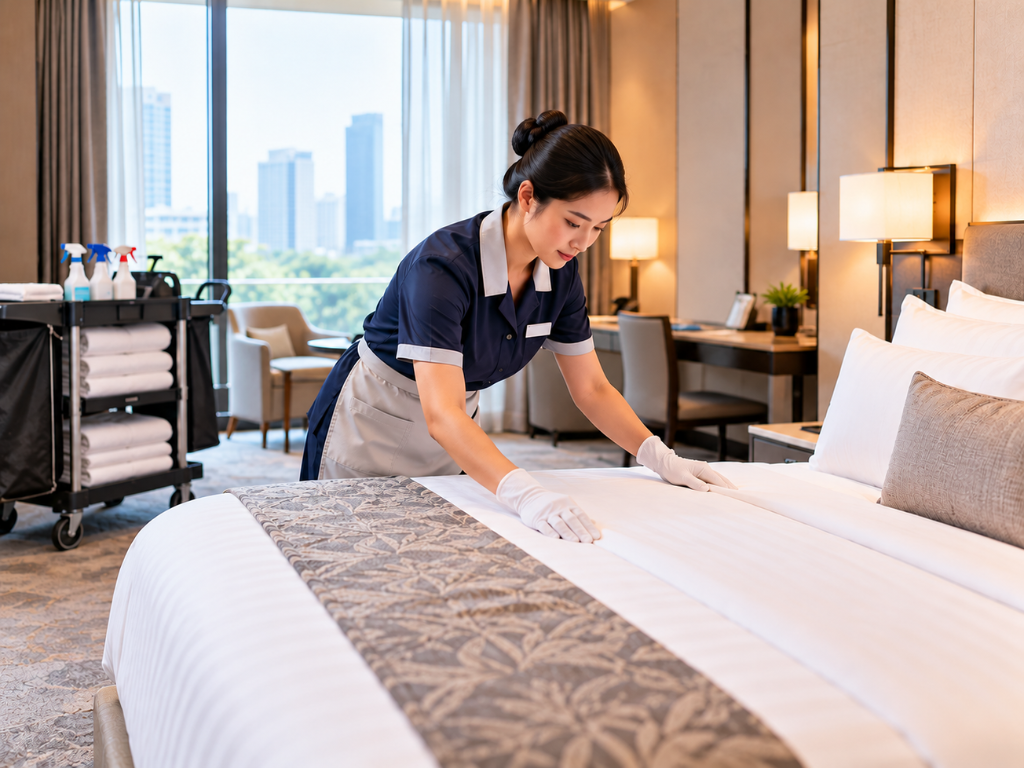
Guest room cleaning standards in a hotel are the documented steps, time allowances and inspection checks that decide when a room is clean enough to sell. In Singapore they carry real volume: STB recorded 81.9% average occupancy across about 73,358 rooms in 2025, roughly 60,000 occupied rooms a night. Below, we set out attendant workflow, room credits and inspections, drawing on our commercial cleaning and hotel housekeeping services.
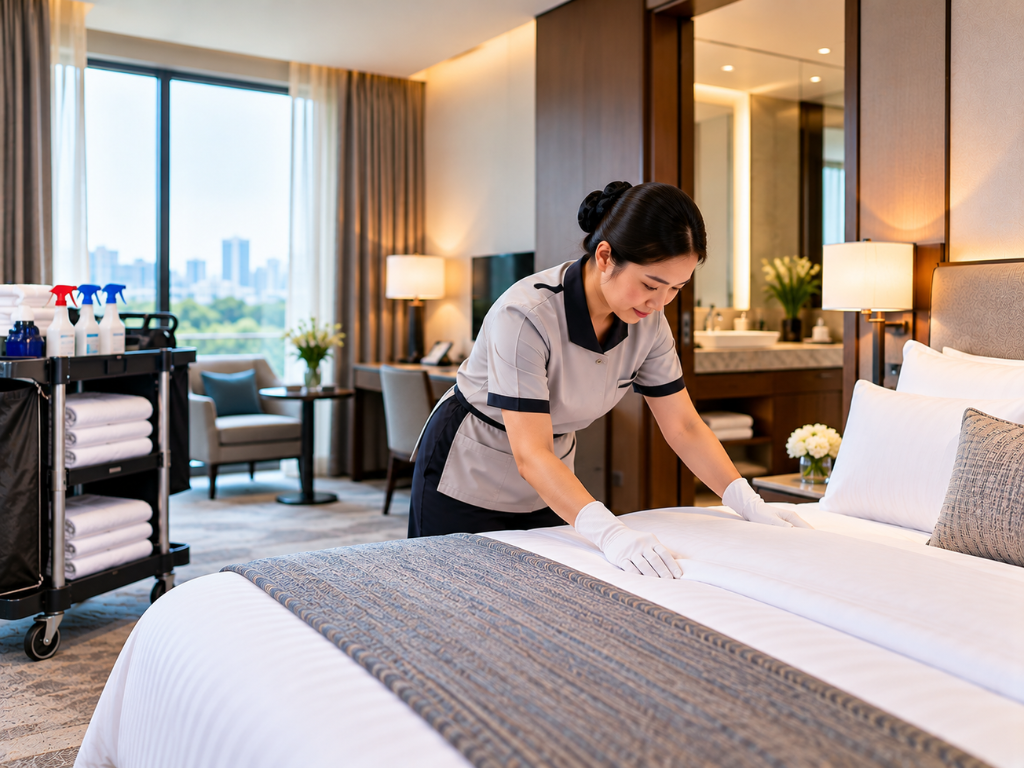
What are the guest room cleaning standards in Singapore hotels?
No Singapore regulation prescribes how a guest room must be cleaned; the standard is whatever the hotel writes down in its brand standards and room SOPs, then times and inspects. The Hotels Licensing Board licenses hotels, and a contractor cleaning rooms needs an NEA cleaning business licence, but neither sets a room-by-room method. A usable standard has four parts. Each room type and status gets an SOP listing every step in sequence, with photographs of the finished room. Each SOP gets a time allowance, expressed as room credits. Each finished room passes an inspection before release to the front office. And each result gets recorded, so the standard can be checked against itself next month. Standards usually fail at the second part. Hotels copy a brand checklist, skip the time allowance, and then wonder why the 3 pm check-in queue grows when occupancy passes 90%. A checklist without a time budget is a wish list. At 81.9% average occupancy, a 300-room Singapore hotel sells about 246 rooms on an average night, and every one of them needs a timed, inspected clean before the next guest arrives.